Bringing a hardware product to market requires much more than a good idea. Businesses must move through research, engineering design, prototyping, testing, sourcing, and manufacturing before a product is ready for customers. Each stage depends on careful planning and technical execution.
Many companies choose a development partner to manage this process because coordinating multiple vendors can lead to delays, additional costs, and inconsistent results. A single team that understands the full product lifecycle can simplify development and reduce risk.
Avantari Technologies works with businesses that need practical hardware engineering support, whether for a new connected device, industrial controller, embedded system, or custom electronics product. Their approach focuses on solving technical challenges while helping clients move efficiently from concept to production.
What End-to-End Hardware Development Means
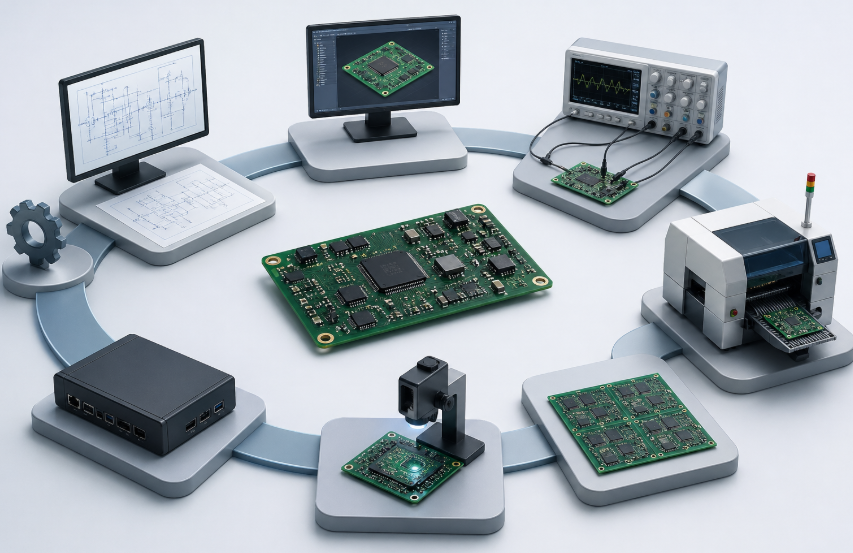
End-to-end hardware development refers to handling the entire journey of a product, rather than just one part of it. Instead of hiring separate teams for PCB design, firmware, prototypes, and production planning, companies work with one engineering partner across all phases.
This model often includes:
- Product discovery and planning
- System architecture
- Circuit and PCB design
- Embedded software development
- Prototype creation
- Functional testing
- Manufacturing preparation
- Production support
Using one team across the lifecycle improves communication and helps keep the product aligned with its original goals.
Why Businesses Need a Structured Development Process
Hardware projects are often more complex than expected. A small change in component selection can affect cost, availability, thermal performance, or board size. Firmware updates may require hardware revisions. Production methods may influence design decisions early in development.
Without a clear process, companies can face:
- Missed launch deadlines
- Repeated redesign cycles
- Budget overruns
- Supply chain issues
- Quality problems after release
A structured development workflow helps avoid these common issues.
How Avantari Technologies Supports Hardware Projects
Avantari Technologies assists businesses by combining engineering planning with practical product execution. Rather than treating hardware as only a design task, the company looks at performance, manufacturability, cost, and future scalability from the beginning.
This can be valuable for startups building a first product as well as established companies expanding into connected devices or custom electronics.
Stage 1: Product Discovery and Requirement Planning
Every successful product begins with clear objectives. Before engineering starts, it is important to define what the product should do, who will use it, and what constraints matter most.
Typical planning topics include:
- Key product features
- Power requirements
- Connectivity needs
- Size limitations
- Environmental use conditions
- Target production cost
- Launch timeline
This early stage reduces confusion later and helps engineering teams make better technical decisions.
Stage 2: Hardware Architecture Design
Once requirements are clear, the next step is choosing the right system architecture. This includes processors, communication modules, sensors, memory, interfaces, and power systems.
Good architecture planning helps ensure:
- Stable performance
- Expandability for future versions
- Reasonable component cost
- Efficient power use
- Easier firmware integration
Poor early decisions in architecture can create expensive redesign work later, which is why this phase matters so much.
Stage 3: PCB Design and Electronics Engineering
The printed circuit board is the foundation of most modern electronic products. Strong PCB design affects reliability, signal quality, thermal behaviour, and production yield.
Engineering work in this stage may include:
- Schematic design
- Component placement
- Routing optimization
- Power integrity checks
- Thermal review
- EMI reduction practices
- Design for Manufacturing Review
Thoughtful PCB development helps products perform consistently in real-world conditions.
Stage 4: Embedded Firmware Development
Most hardware products now rely on embedded software to manage device functions. Firmware connects electronics to real user experiences.
This can include:
- Sensor data handling
- Communication protocols
- Bluetooth or Wi-Fi features
- Device control logic
- Power-saving modes
- Security features
- Update systems
When hardware and firmware teams work closely together, products typically reach stability faster.
Stage 5: Prototyping and Validation
A prototype turns engineering files into something real that can be tested. This stage is critical because physical testing often reveals issues not visible in simulation.
Prototype benefits include:
- Functional verification
- User experience review
- Performance testing
- Early bug discovery
- Demonstrations for investors or stakeholders
- Faster design refinement
Several prototype rounds are common before full production.
Stage 6: Testing for Reliability
Products must perform outside controlled lab environments. Testing helps uncover weak points before launch.
Typical validation areas include:
- Temperature behavior
- Long runtime stability
- Connectivity consistency
- Power consumption
- Mechanical durability
- Interface reliability
Reliable testing reduces the chance of expensive field failures.
Stage 7: Manufacturing Readiness
Moving from prototype to production is where many projects struggle. A design that works in low quantities may still need changes for efficient assembly.
Production preparation can involve:
- BOM optimization
- Alternate component planning
- Assembly documentation
- Quality procedures
- Factory coordination
- Cost review
Planning for manufacturing early helps shorten the path to launch.
Industries That Use End-to-End Hardware Development
Businesses across many sectors benefit from complete development support.
IoT and Smart Devices
Connected sensors, smart appliances, tracking devices, and remote monitoring systems.
Industrial Systems
Controllers, gateways, automation devices, and equipment monitoring hardware.
Healthcare Technology
Wearables, monitoring electronics, and connected support devices.
Consumer Electronics
Lifestyle gadgets, accessories, and smart products.
Agriculture Technology
Environmental sensors, irrigation controls, and field monitoring tools.
Why a Single Development Partner Can Help
Working with multiple separate vendors may seem flexible, but it often creates handoff problems. Each team may optimize only its own part instead of the full product.
Using one partner across stages can improve:
- Communication speed
- Accountability
- Technical consistency
- Project timelines
- Cost control
This is one reason many businesses prefer integrated hardware development teams.
Support for Startups
Startups often need to move quickly while managing limited budgets. They may also need help translating an idea into a manufacturable product.
A development partner can assist with:
- MVP hardware design
- Fast prototyping
- Cost-conscious engineering
- Iterative improvements
- Investor demonstration units
- Production planning
This helps startups reduce early mistakes and launch with more confidence.
Support for Established Companies
Larger businesses may already have products but need outside expertise for new categories, redesigns, or connected upgrades.
Common needs include:
- Legacy hardware modernization
- Custom product extensions
- Dedicated engineering capacity
- Faster new product cycles
- Manufacturing optimization
External specialists can help internal teams move faster.
Looking Ahead
Hardware products are increasingly expected to be connected, efficient, secure, and upgradeable. Companies that plan for future needs during development usually gain longer product lifecycles and better return on investment.
That means thinking about:
- Remote updates
- Modular expansion
- Better power efficiency
- Secure communications
- Supply chain resilience
These factors are becoming standard expectations, not optional extras.
Final Thoughts
End-to-end hardware development is about more than designing electronics. It is a coordinated process that turns an idea into a dependable product ready for real users and real production.
Avantari Technologies supports businesses through these stages with practical engineering input and product-focused execution. For companies developing custom electronics, embedded devices, or connected systems, a structured approach can save time, reduce risk, and improve launch readiness.