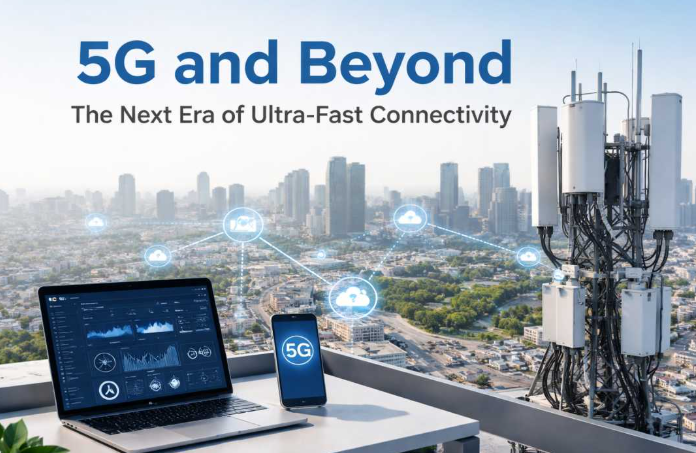
5G technology represents the fifth generation of wireless communication, designed to deliver faster speeds, lower latency, and greater capacity than previous networks. It enables seamless connectivity for smartphones, devices, and emerging technologies. Unlike earlier systems, 5G supports massive data exchange in real time, making it essential for modern digital transformation and powering innovations across industries worldwide for businesses and consumers seeking reliable high-speed communication solutions today.
Evolution from 1G to 5G
Wireless technology has evolved significantly from 1G analog voice systems to advanced digital networks. 2G introduced basic texting, while 3G enabled mobile internet access. 4G revolutionized streaming and app usage with higher speeds. Now, 5G builds on this foundation by offering ultra-fast connectivity and near-instant response times, transforming how people communicate, work, and interact with digital platforms in everyday life across the globe.
Key Features of 5G Networks
Key features of 5G include ultra-low latency, enhanced bandwidth, and the ability to connect millions of devices simultaneously. It supports advanced technologies such as artificial intelligence, virtual reality, and the Internet of Things. Additionally, 5G networks are designed to be more energy-efficient and scalable, allowing businesses and governments to deploy smarter solutions that improve efficiency, productivity, and overall connectivity in both urban and rural environments.
How 5G Works
Spectrum Bands (Low, Mid, High)
5G operates across three main spectrum bands: low, mid, and high frequency. Low-band provides wide coverage but slower speeds, while mid-band offers a balance between speed and range. High-band, also known as millimeter wave, delivers extremely fast speeds but covers shorter distances. This combination ensures flexible deployment, allowing network providers to optimize performance based on geographic and user requirements for consistent connectivity experiences.
Small Cells and Network Infrastructure
To support higher frequencies, 5G relies on small cells instead of traditional large towers. These compact base stations are installed closer together in urban areas, improving signal strength and reducing congestion. This dense infrastructure enables faster data transmission and better coverage in high-demand locations. However, it also requires significant investment and planning, making deployment more complex compared to previous generations of wireless networks.
Role of Massive MIMO and Beamforming
Massive MIMO and beamforming are critical technologies behind 5G performance. Massive MIMO uses multiple antennas to send and receive more data simultaneously, increasing network efficiency. Beamforming directs signals toward specific devices rather than broadcasting them widely, improving speed and reducing interference. Together, these technologies enhance network reliability and ensure users experience consistent, high-quality connections even in crowded environments with heavy data usage demands.
Key Benefits of 5G Connectivity
Faster Speeds and Lower Latency
One of the most significant advantages of 5G is its ability to deliver extremely fast data speeds and ultra-low latency. Users can download large files in seconds and experience real-time responsiveness in applications like gaming and video conferencing. This improved performance supports advanced technologies that require instant communication, enabling smoother and more efficient digital interactions across various platforms and devices in everyday usage scenarios.
Improved Network Reliability
5G networks are designed to handle a large number of connected devices without compromising performance. This improved reliability ensures consistent connectivity even in densely populated areas such as cities, stadiums, and events. Businesses can depend on stable connections for critical operations, while consumers benefit from fewer interruptions, making 5G an essential upgrade for modern communication systems and digital infrastructure worldwide today.
Enhanced User Experience
With faster speeds and better reliability, 5G significantly enhances the overall user experience. Streaming high-definition content becomes smoother, online gaming becomes more responsive, and smart devices become more efficient. Users can enjoy seamless connectivity across multiple devices without lag or buffering. This improved experience supports a more connected lifestyle, enabling people to stay productive, entertained, and engaged in an increasingly digital world driven by innovation.
Applications of 5G Across Industries
Healthcare and Remote Surgery
In healthcare, 5G enables real-time data sharing and remote procedures. Surgeons can perform operations using robotic systems with minimal delay, improving access to specialized care. Telemedicine also becomes more effective, allowing patients to consult doctors from remote locations. These advancements enhance healthcare delivery, reduce response times, and improve patient outcomes by leveraging reliable, high-speed connectivity in critical medical applications and services.
Smart Cities and IoT
5G plays a vital role in developing smart cities by connecting sensors, devices, and systems. It enables efficient traffic management, energy usage optimization, and improved public safety. The Internet of Things benefits from faster data processing and real-time communication, allowing cities to operate more intelligently. This leads to better resource management, reduced costs, and enhanced quality of life for residents in urban environments worldwide today.
Autonomous Vehicles and Transportation
Autonomous vehicles rely on real-time data to operate safely, and 5G provides the necessary speed and reliability. Vehicles can communicate with each other and the infrastructure to avoid accidents and optimize routes. This technology improves transportation efficiency, reduces congestion, and enhances safety. As 5G adoption grows, it will play a crucial role in shaping the future of mobility and intelligent transportation systems globally.
Challenges and Limitations of 5G
Infrastructure Costs
Deploying 5G requires significant investment in infrastructure, including small cells, fiber networks, and advanced equipment. These costs can be a barrier for developing regions and smaller providers. Building and maintaining such networks also demands skilled resources and long-term planning, making widespread adoption a gradual process despite the potential benefits offered by this advanced wireless technology.
Limited Coverage Areas
While 5G offers impressive speeds, its high-frequency signals have a limited range and struggle to penetrate obstacles like buildings. This results in uneven coverage, especially in rural or remote areas. Expanding coverage requires additional infrastructure, which can take time and resources, delaying full accessibility for all users across different geographic regions and environments globally today.
Security and Privacy Concerns
As 5G connects more devices, it also increases potential security risks. Cyberattacks, data breaches, and privacy issues become more complex with interconnected systems. Ensuring strong security measures is essential to protect user data and maintain trust. Governments and organizations must implement robust policies and technologies to address these challenges and ensure safe, reliable network operations in the evolving digital landscape.
Technologies Powering Beyond 5G
Artificial Intelligence Integration
Artificial intelligence is becoming a core driver of networks beyond 5G, enabling smarter and more adaptive connectivity. AI can analyze massive amounts of network data in real time, allowing systems to optimize performance, predict failures, and manage traffic efficiently. This integration improves speed, reliability, and energy usage. As networks grow more complex, AI ensures seamless communication between devices, supporting innovations such as smart environments, autonomous systems, and intelligent services across multiple industries worldwide.
Edge Computing
Edge computing plays a critical role in advancing connectivity by processing data closer to the source rather than relying on distant data centers. This reduces latency and improves response times, which is essential for applications like gaming, healthcare, and industrial automation. By handling data locally, edge computing also reduces bandwidth usage and enhances privacy. Combined with next-generation networks, it enables faster decision-making and supports real-time applications that demand instant processing and minimal delays.
Satellite Internet and Space-Based Networks
Satellite internet and space-based networks are expanding global connectivity by reaching areas where traditional infrastructure is limited. These technologies provide high-speed internet access in remote and rural regions, bridging the digital divide. Low Earth orbit satellites offer lower latency compared to older systems, making them more suitable for modern applications. As these networks evolve, they will complement terrestrial systems, creating a more resilient and globally accessible communication ecosystem for users everywhere.
Impact of 5G and Beyond on Businesses
Digital Transformation Acceleration
Advanced connectivity is accelerating digital transformation across businesses by enabling faster communication, automation, and data-driven decision-making. Organizations can adopt cloud technologies, artificial intelligence, and advanced analytics more effectively with reliable high-speed networks. This transformation improves operational efficiency and enhances customer experiences. Businesses that leverage these technologies gain a competitive advantage, allowing them to innovate quickly and respond to changing market demands with greater agility and precision.
New Business Models
The capabilities of 5G and beyond are driving the creation of new business models and revenue streams. Companies can offer services such as real-time data analytics, subscription-based platforms, and connected product ecosystems. Industries are shifting toward service-oriented approaches, where value is delivered continuously rather than through one-time transactions. This shift encourages innovation and opens opportunities for startups and established organizations to explore new markets and redefine traditional business strategies effectively.
Industry-Specific Innovations
Different industries are benefiting from tailored innovations powered by advanced connectivity. Manufacturing uses smart factories and automation to improve productivity, while retail enhances customer engagement through personalized experiences. Logistics companies optimize supply chains with real-time tracking, and agriculture leverages connected devices for precision farming. These industry-specific solutions improve efficiency, reduce costs, and create new possibilities, demonstrating how next-generation networks are transforming sectors in unique and impactful ways globally.
The Future of Connectivity Beyond 2030
Hyper-Connected World Vision
Beyond 2030, the world is expected to become fully hyper-connected, with billions of devices communicating seamlessly. This vision includes smart homes, intelligent cities, and interconnected industries working together efficiently. Connectivity will be deeply embedded in everyday life, enabling real-time interactions and personalized experiences. Such a world will rely on advanced networks that provide consistent performance, ensuring that communication remains fast, reliable, and accessible across diverse environments and applications.
Role of AI and Automation
Artificial intelligence and automation will play a central role in shaping the future of connectivity. Networks will become self-managing, capable of detecting issues and resolving them without human intervention. AI-driven systems will also enhance security by identifying threats in real time. Together, these technologies will create more efficient and intelligent networks that support the growing demands of a digitally connected global society.
Predictions and Emerging Trends
Emerging trends suggest that future networks will offer even faster speeds, lower latency, and greater capacity. Technologies such as advanced wireless systems, quantum communication, and integrated sensing will redefine connectivity. The integration of physical and digital worlds will become more seamless, enabling new applications in entertainment, healthcare, and education. These advancements will continue to push the boundaries of innovation, shaping a future where connectivity plays a vital role in every aspect of life.
Frequently Asked Questions (FAQs)
What makes 5G faster than 4G?
5G is faster than 4G because it uses advanced technologies such as higher frequency bands, improved data encoding, and more efficient network management. These improvements allow it to deliver greater speeds and lower latency for users.
Is 5G available worldwide?
5G is expanding globally, but availability varies by region. Urban areas typically have better coverage, while rural regions may still rely on older networks as infrastructure continues to develop.
Does 5G consume more battery?
5G can use more battery in some cases due to higher data speeds, but modern devices are optimized to manage power efficiently, reducing overall impact on battery life.
Is 5G safe for health?
Current research indicates that 5G is safe and operates within established safety guidelines. Regulatory bodies continue to monitor their impact to ensure public safety.
Conclusion
The evolution beyond 5G marks a transformative era in connectivity, driven by advanced technologies and innovative solutions. From artificial intelligence to satellite networks, these developments are reshaping industries and enhancing everyday experiences. Businesses are adapting to new opportunities, while future networks promise even greater capabilities. As connectivity continues to evolve, it will play a crucial role in building a smarter, more connected, and technologically advanced world for generations to come.